To view queue settings, navigate in the top menu to ’Telephony’ → ‘VPBX’ tab → ‘Call routing’ in the left-hand menu → 'Queues’.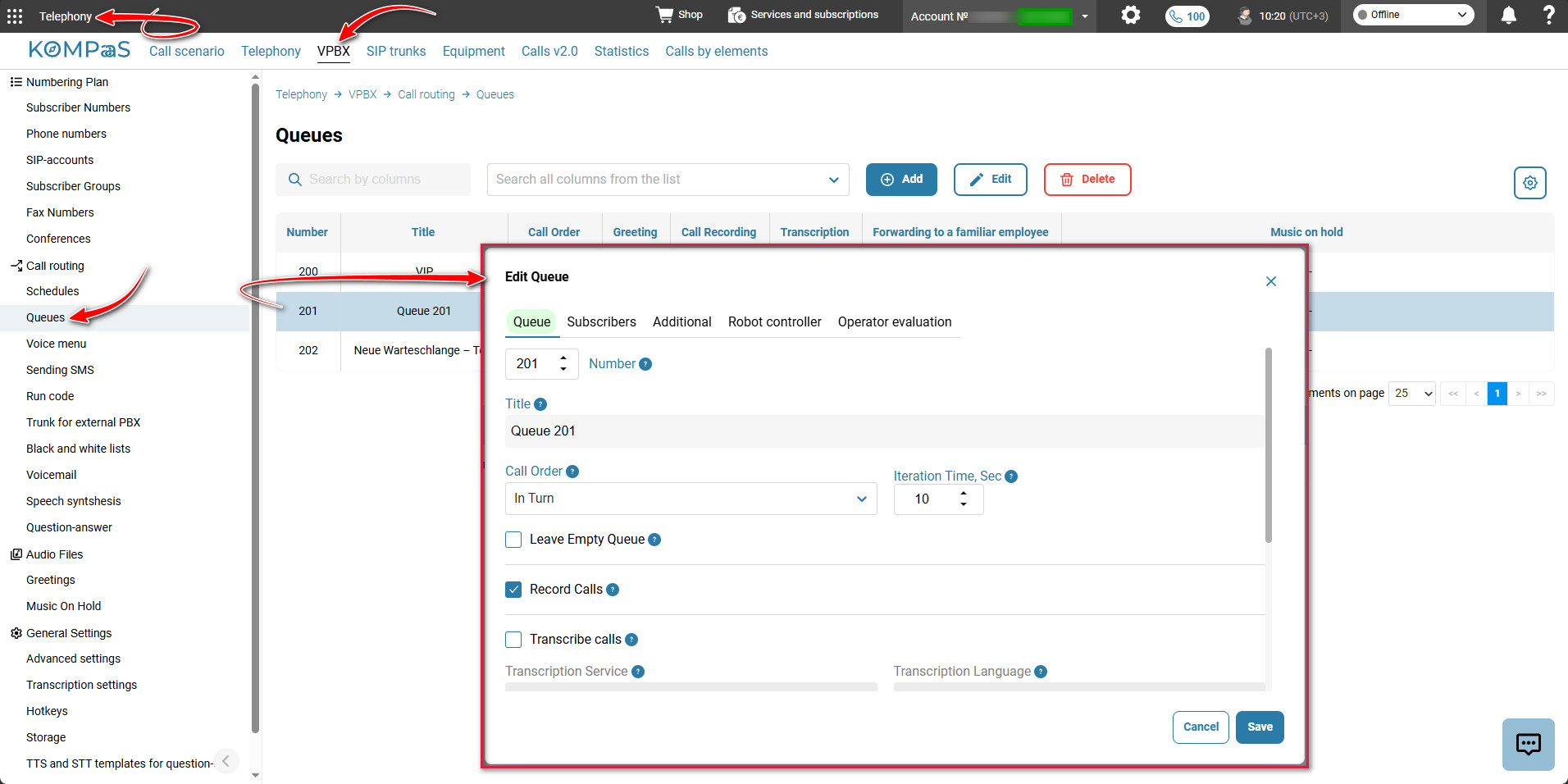
The virtual PBX supports the following queue call distribution algorithms:
In Turn — calls are routed to agents in sequence.
The order in which agents are called may differ from the order configured in VPBX. If an agent is busy or does not answer, the call is routed to the next agent, and so on until an available agent is found or the queue waiting time expires.
Example 1:
If the previous call stopped at agent 1, who did not answer, the next call will be routed to agent 2.
Call Example 1:
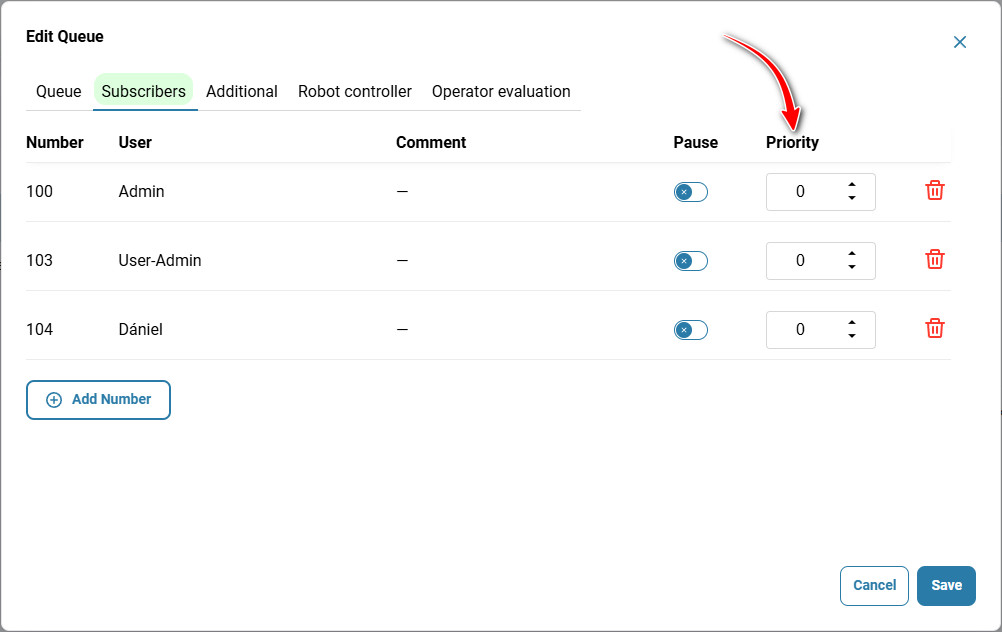
There are four agents in the queue with the same ‘zero priority’, and the call distribution order is ’In Turn’.
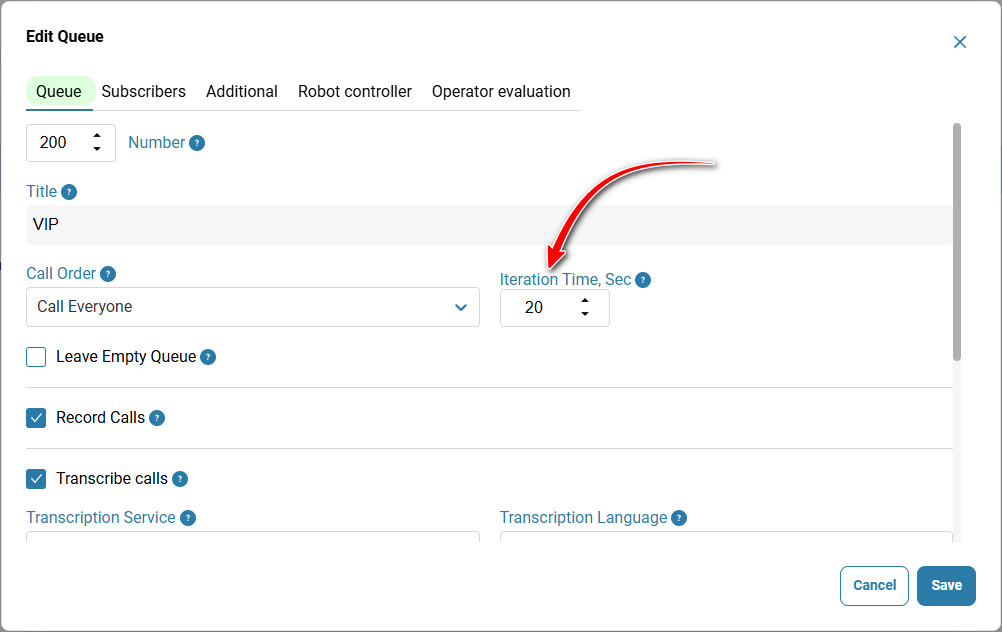
In our case, the ’In Turn’ call distribution order means that the system switches to the next agent every 20 seconds. VPBX determines the order of the agents automatically. For example: 103, 104, 100, then again 104, 103, 100, etc. Or 100, 103, 104, etc.
Example 2:
If agent 1 does not answer and the call is transferred to agent 2, the next call will return to agent 1 only after all agents in the queue have been called.
Call Example 2:
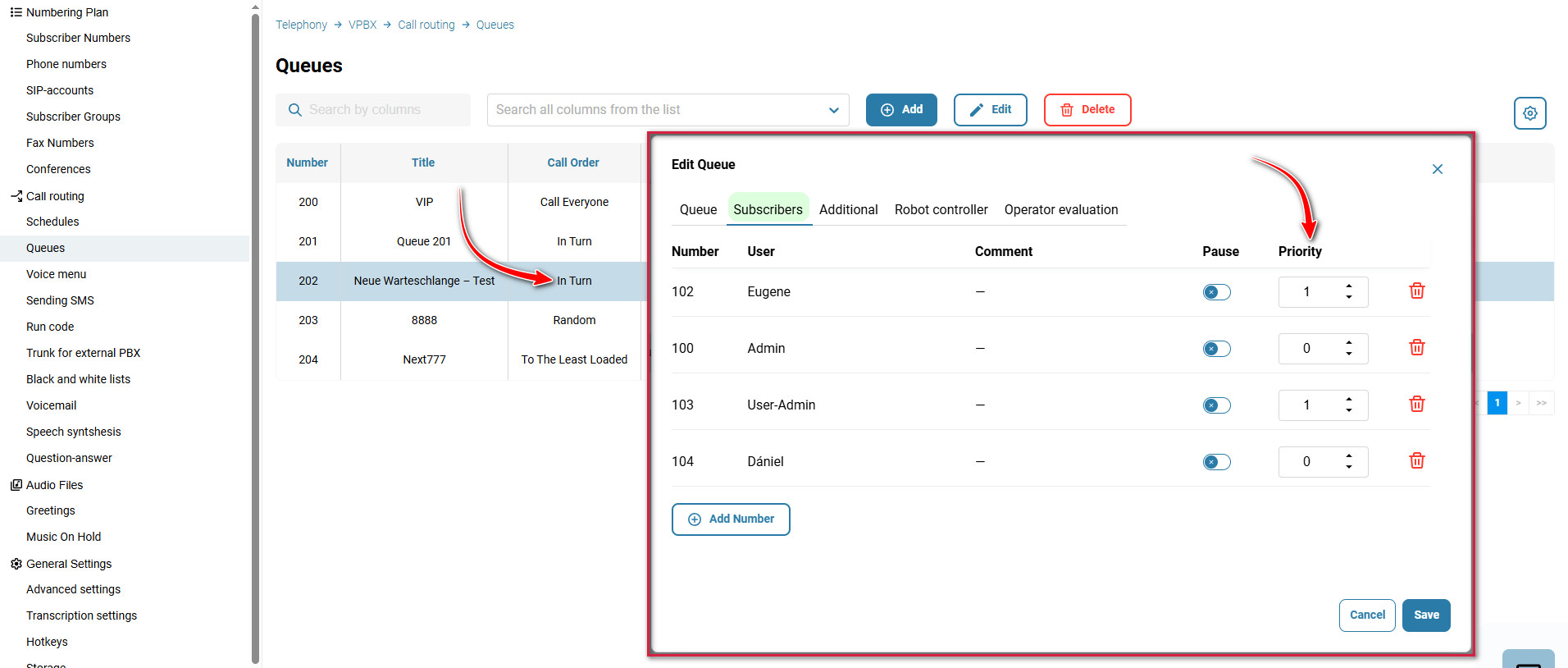
There are four agents in the queue — two with ’zero priority’ and two with ’first priority’. The call distribution order is ’In Turn’.
In our case, the ’In Turn’ call distribution order means that the system switches to the next agent every 20 seconds — first within the highest priority group, and after all agents in that priority have been called, the call moves to the next lower priority group. After that, the call returns to the highest priority group again. This process continues until the caller hangs up. Calls within the same priority group are distributed according to Call Example 1.
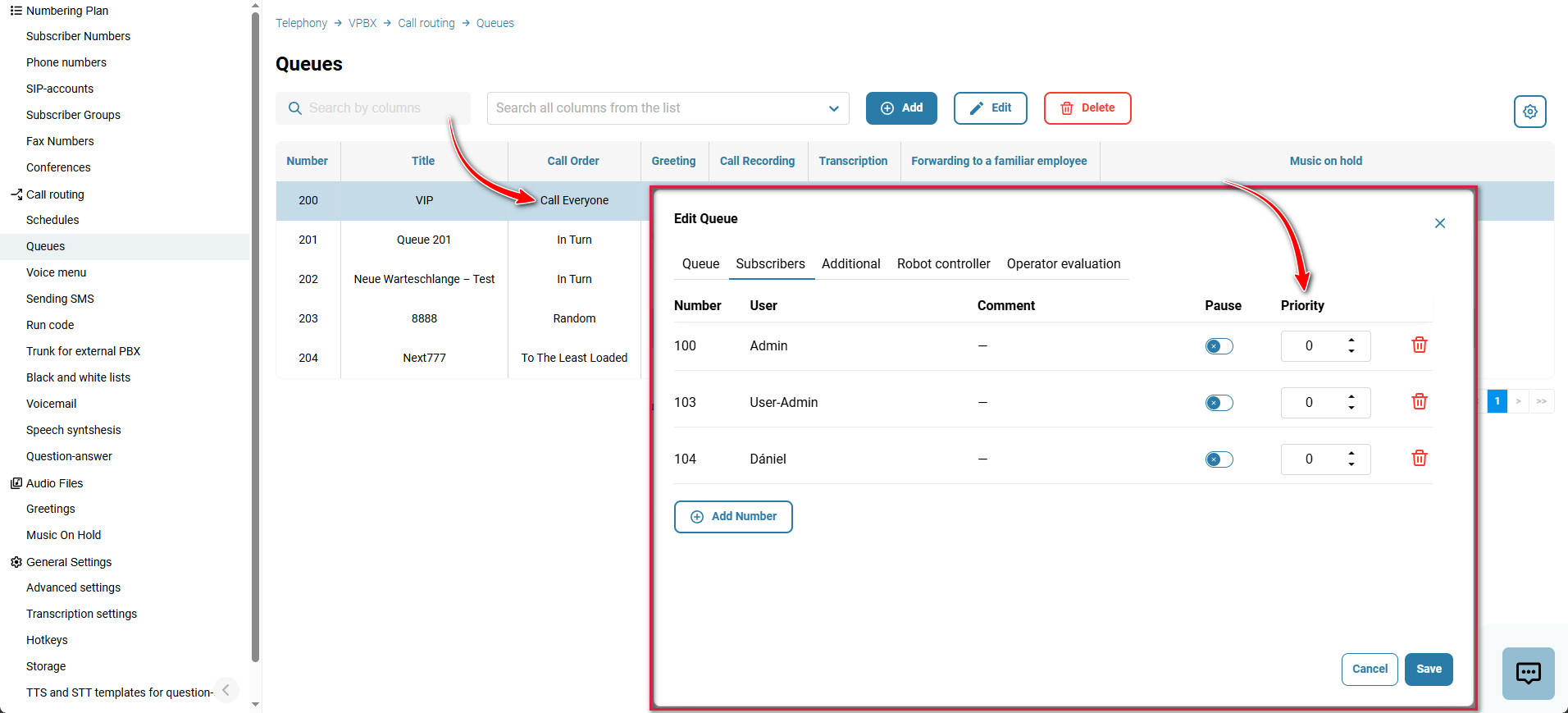
Call Everyone — the call is routed simultaneously to all agents within the same priority group, and the first agent to answer handles the call. The ’Call Everyone’ algorithm makes it possible to prioritize more experienced agents (with the same ’zero’ priority) while reducing queue waiting time, since there is no interval between calls within the group.
First example — there are three agents with the same ’zero’ priority, and the call distribution order is ’Call Everyone’. The call will ring all agents simultaneously.
Second example — there are three agents — one with ’zero’ priority and two with ’first’ priority. The call distribution order is ’Call Everyone’.
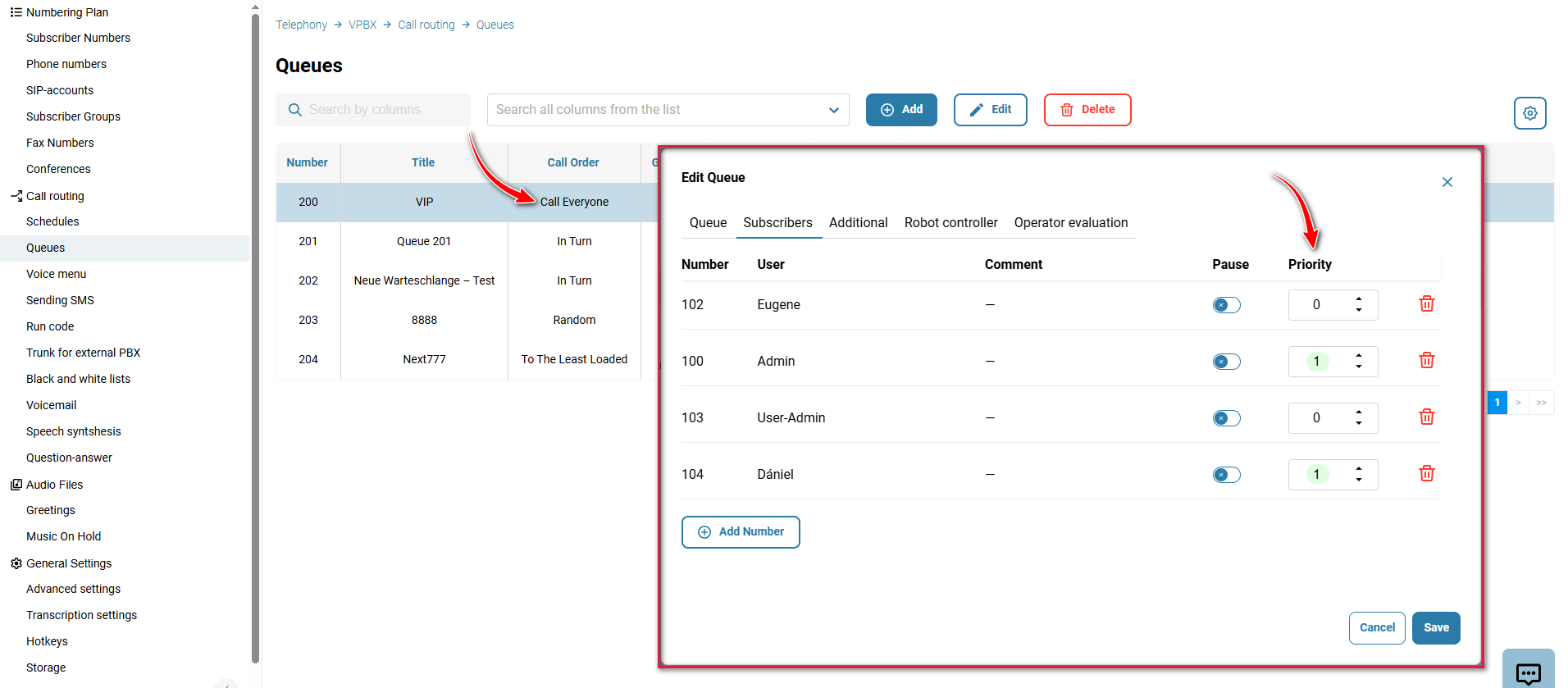
The first call will be routed to agent 100 and will continue ringing until agent 100 answers (indefinitely). At the same time, a second parallel call will be sent to agents 103 and 104. If the second call is not answered, and during that time the agent with zero priority finishes the previous conversation, then after the next iteration (see screenshot below), the call will be routed to the zero-priority agent.
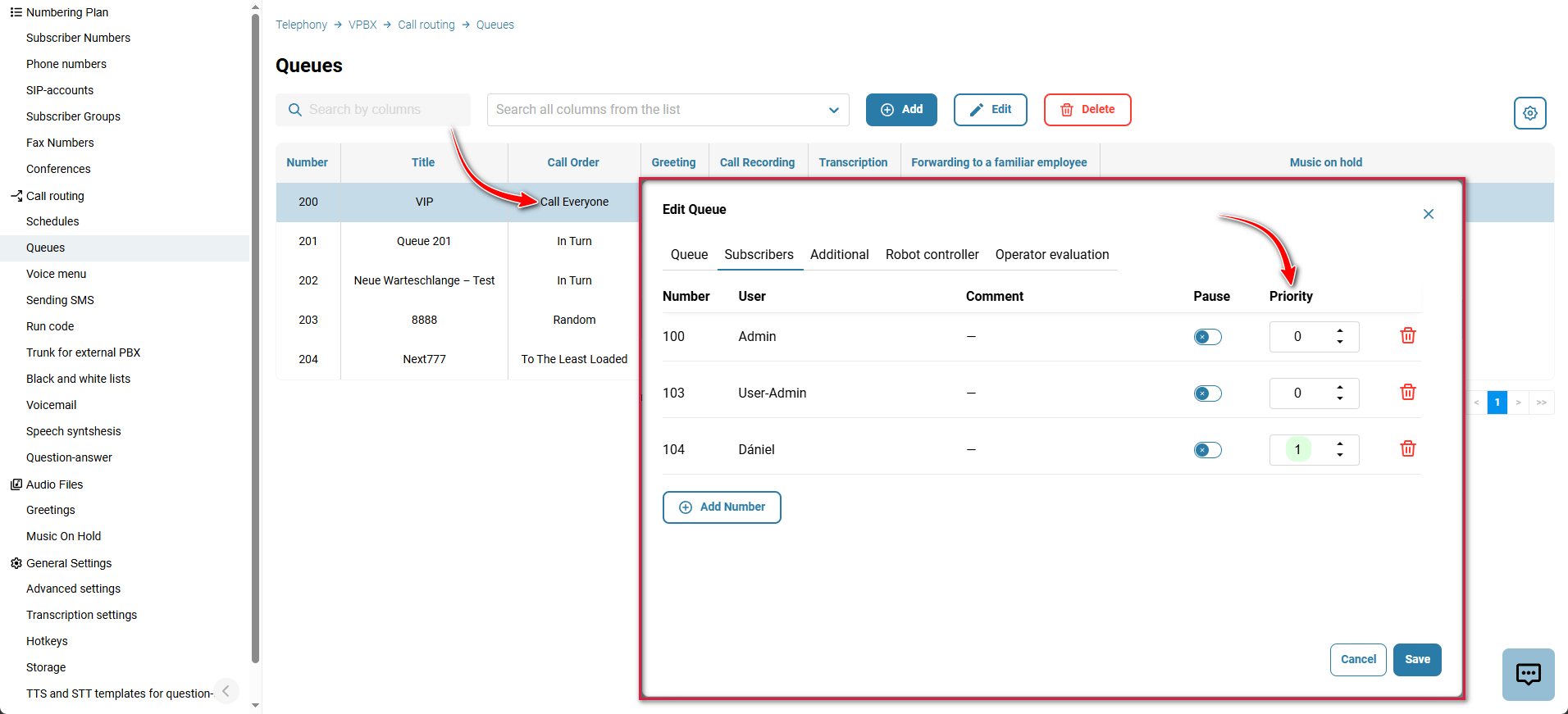
Third example — there are three agents — two with zero priority and one with first priority. The call distribution order is ’Call Everyone’.
Option 1. The first call will ring agents 100 and 103. If neither agent 100 nor agent 103 answers, the second parallel call will be routed to agent 104 with ’priority 1’.
Option 2. The first call will ring agents 100 and 103. If one of them answers, for example agent 103, the second parallel call will then be routed to agent 100 with ’priority 0’.
Random — calls are routed randomly without considering priorities.
To The Least Loaded — the call is routed to the least busy agent. The agent who has just answered a call automatically moves to the end of the queue. The next agent who answers a call also moves to the end, shifting the previous agent one position up. This allows calls to be distributed evenly among all agents.
For example:
There are four agents in the queue with the same ’zero priority’, and the call distribution order is ’To The Least Loaded’.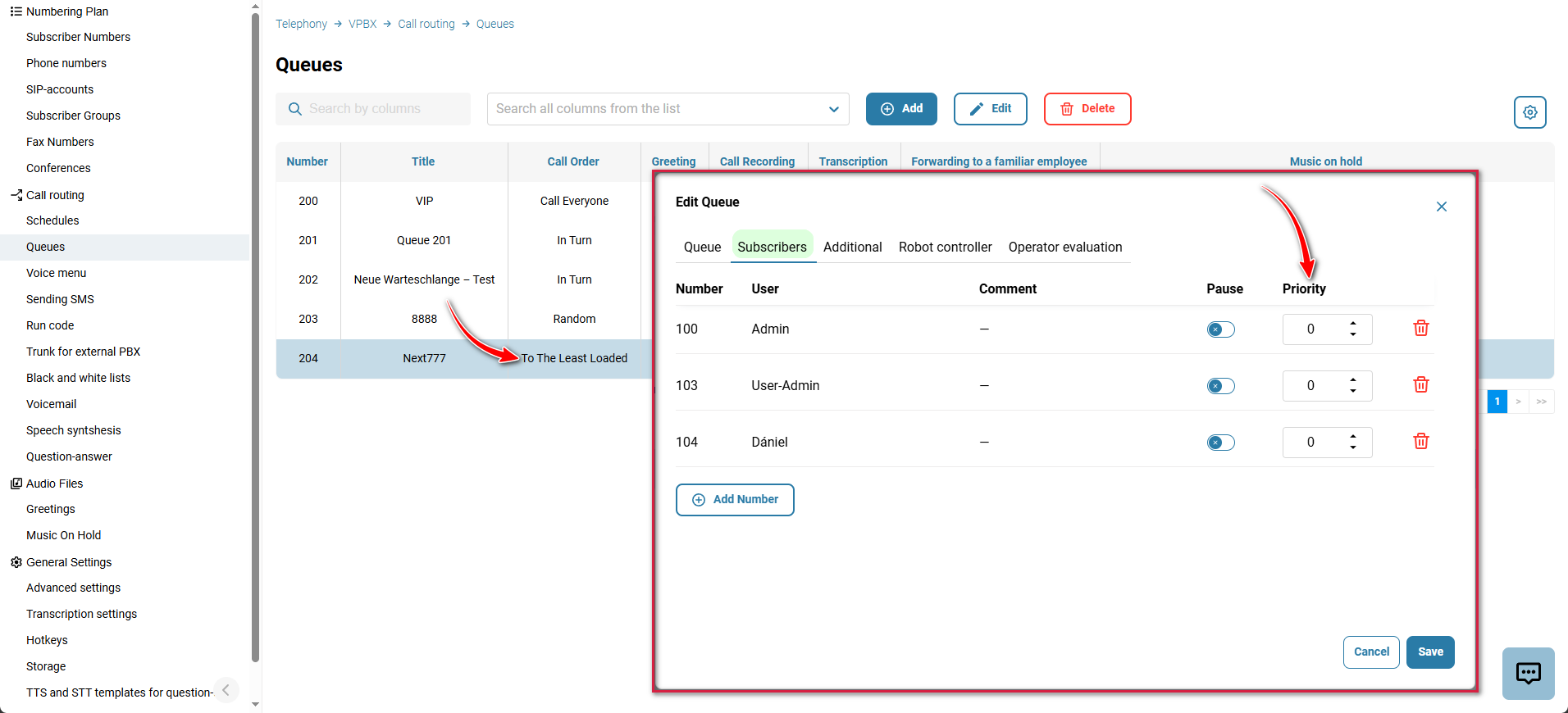
Special Case 1:
The call was routed to agent 108, who had handled the fewest calls. In this case, the queue order did not change during the call, so after each 20-second iteration, the call continued to be routed to agent 108 because they remained the least loaded. This process continues until the caller hangs up.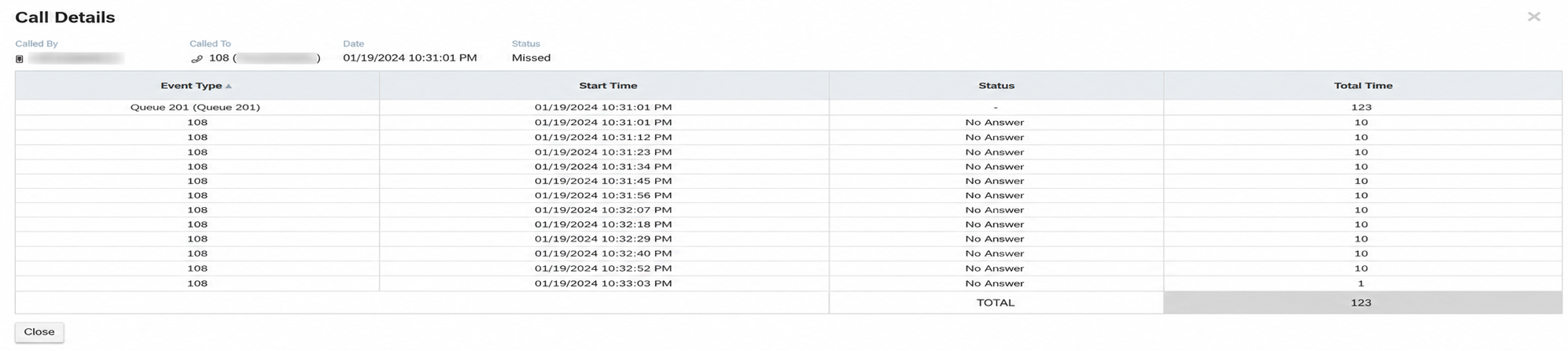
Special Case 2:
The call was routed to agent 116, who had handled the fewest calls. Agent 116 rejected the call, so it was routed to agent 103, who had handled the next fewest calls after agent 116. After five attempts to reach agent 103, the call was routed back to agent 116 because they still had the lowest number of handled calls. However, agent 116 rejected the call again, and the call was then routed to agent 105, where it was finally answered.
Was this article helpful?
That’s Great!
Thank you for your feedback
Sorry! We couldn't be helpful
Thank you for your feedback
Feedback sent
We appreciate your effort and will try to fix the article